
Let’s Talk About What We’re Feeding Our Gut

Spend enough time online and you could come away convinced that every craving, bloated tummy or tired afternoon means you have parasites.
Before long, you’re looking at a cleanse, a binder, a supplement bundle and a programme to get rid of something you may never have had.
I think we need to take a breath and bring the conversation back to everyday life. What are we eating? What are we feeding the community of organisms inside us? And how well are we looking after ourselves?
Do I have parasites?
Bloating, tiredness or sugar cravings alone don’t tell you whether you have parasites. These symptoms can have many different causes.
Parasites are real, but we shouldn’t assume that every digestive wobble means we have an unwanted guest. Equally, eating well cannot guarantee protection against an infection.
It helps to understand the difference between parasites and the normal community of organisms living in our gut.
What’s the difference between parasites and gut bacteria?
Our gut is home to a remarkable collection of bacteria and other microorganisms, known as the gut microbiome. Many help us digest food, support our immune system and protect against harmful organisms. They belong there. A healthy gut is full of life.
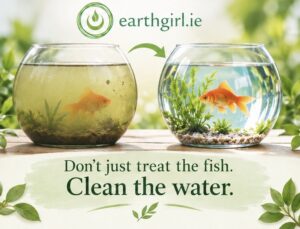
Think of it as a garden. What we feed it, and the conditions we provide, influence what grows.
Our microbes aren’t simply a cleaning crew sent in to deal with junk food. They use the nutrients available to them, and different foods favour different organisms. Some break down fibre that we cannot digest ourselves, producing substances that benefit us in return.
That makes our everyday food choices worth paying attention to. Research in people has shown that a diet providing more fibre and minimally processed foods can change the microbiome and increase its production of beneficial compounds.
When we feed ourselves, we’re also feeding that inner community.
Are threadworms and pinworms the same thing?
Yes—threadworms and pinworms are two names for the same intestinal worm. They are common in children and can spread through households. Adults can get them too.
They are an infection, rather than a sign that someone’s body is dirty. They are also different from the helpful microorganisms that naturally live in our gut.
Having a thriving microbiome is part of being human. It doesn’t mean we are infested or need a cleanse.
Do I need a parasite cleanse?
A list of everyday symptoms on a social media post cannot tell you that you need a parasite cleanse.
There is a commercial market around detoxes and cleanses, and it deserves the same scrutiny as any other industry selling health products. Many detox claims have limited research behind them, however convincing the advertising may sound.
My concern is what happens when ordinary discomfort becomes a sales opportunity. A long list of vague symptoms can make almost anyone feel that they need the product at the bottom of the page.
Before spending money, ask: what is this product supposed to do? What supports that claim? And do I have a reason to believe I need it?
As someone who makes herbal products, I believe those questions should apply to my own products too. Nobody should feel frightened into buying something. A supplement should never replace understanding what is actually going on.
How can I support my gut microbiome through diet?
When I talk about nourishing the “terrain”, I mean the conditions we create through our everyday habits. It’s a way of thinking about caring for ourselves, rather than a diagnosis or a promise that diet can clear an infection.
Start with your plate. Make more room for vegetables, fruit, beans, lentils, oats, nuts and seeds, according to what suits your digestion. Variety gives your gut microbes different fibres to work with. Introduce extra fibre gradually if you’re prone to bloating.
That doesn’t mean eating perfectly. It means looking honestly at what makes up most of your day. Are proper meals being squeezed out by packets, snacks and whatever you can grab between jobs?
Give yourself time to sit down, eat and enjoy your food. Drink water throughout the day. Pay attention to your bowel habits and what helps you feel comfortable and regular.
Then look beyond food: daylight, fresh air, movement, rest and a little space in the day to slow down. These are the habits I want at the centre of the conversation.
Care for what’s helping you
We don’t need to treat our gut as an enemy. Much of the life inside us plays a useful role, although some organisms can cause harm.
The aim is to care for that ecosystem and give it the nourishment it needs.
Before asking, “What do I need to get rid of?”, perhaps we can begin with, “What am I feeding myself, and what could I do a little better?”
That gives us somewhere practical to start. A proper meal. More variety. A glass of water. A walk outside. Small choices we can return to tomorrow, and the day after.
A little about Gut Tone No.1
My interest in traditional herbalism led me to create Gut Tone No.1, a small-batch tincture made with wormwood, clove bud and black walnut hull.
If you’re looking for a gentle reset, begin with your everyday habits: nourishing meals, water, movement and rest. Gut Tone No.1 is an optional herbal addition to that approach, alongside positive changes to your diet.
You can learn more about its ingredients, directions and suitability on the product page.
Your Health Starts With You.